
Replacing a cracked or sunken drive
When the old drive has broken up or settled where you park, we take it out rather than paving over it, because new pavers laid on a failed base will sink right along with it.
Tired of a cracked, sunken or patched driveway? We build paver drives on a firm base with solid edges and water running away from your house.
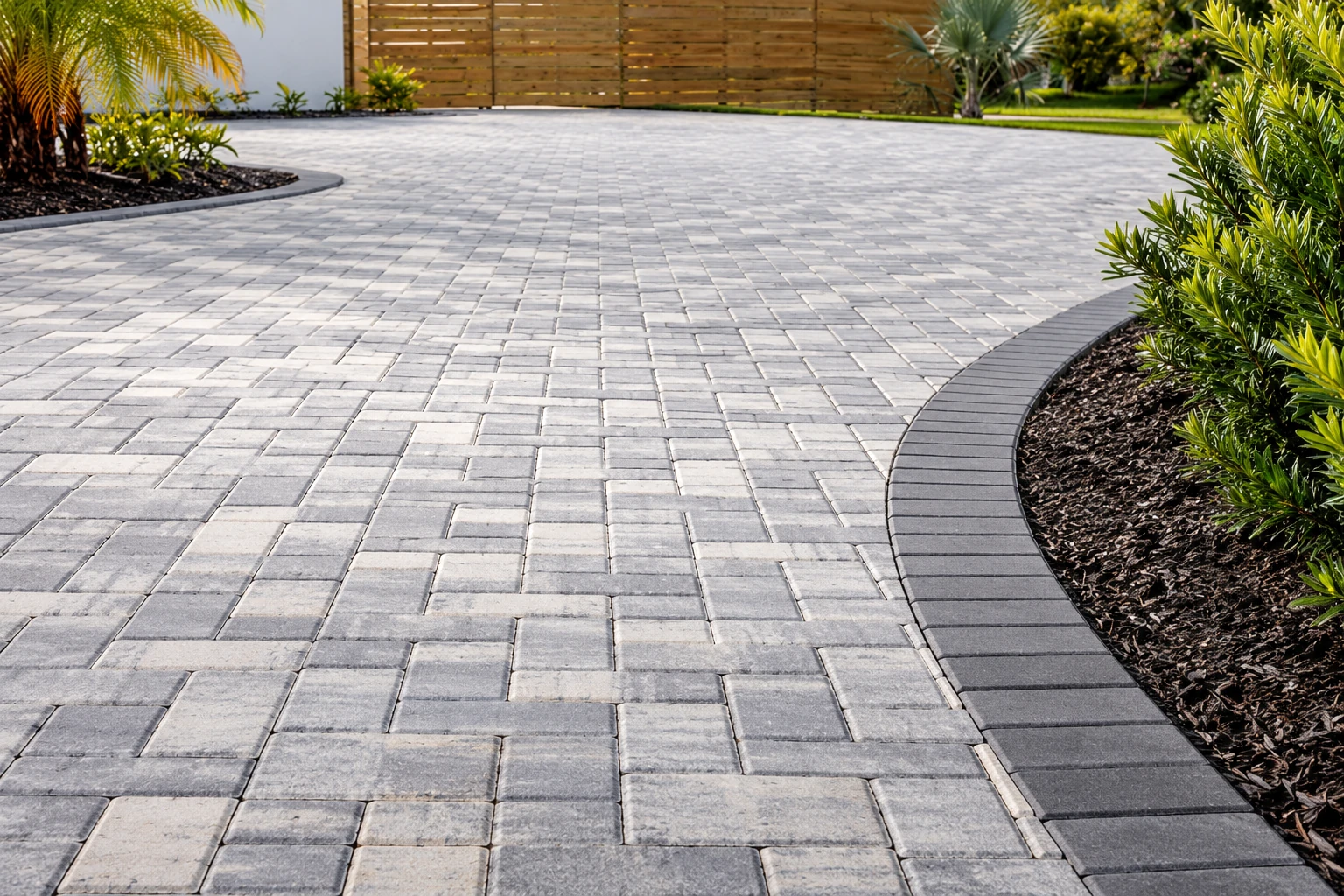
Capstone Little Rock Masonry & Concrete builds driveway pavers in Little Rock, AR and the cities around it across central Arkansas. We take out a tired drive and lay concrete pavers over a compacted base, a level sand bed and firm edges that hold it all together.
Most people call us when their drive has cracked, has sunk where the car sits or holds water by the garage. Others call when an older paver job has started to spread and rock at the edges. Pavers can fix all of that, but only if what's under them is built to carry a car, so that's where I spend most of our first conversation.
The price mostly comes down to the size of the drive, whether an old one has to come out first, how much base your ground and traffic call for, whether drainage has to be added, and the paver and pattern you pick. The schedule turns on the same size and tear-out, plus the weather and any permit the job needs. I come out, look at it in person and write up what we'd do and why, and we're fully licensed and insured.
I come out to look at your drive before we price it, and I work on it alongside the crew. The person who explained the plan to you is there when the base goes in.
When you're holding two or three quotes, I'll walk you through what's in ours and why. That way you can see exactly where the base, edges and drainage are covered.
We're best known for work on older brick homes, so I'll help you pick paver colors and borders that sit well next to the brick you already have instead of fighting it.
A paver drive is only as good as what's under it, so that's where our time goes. We lay out the drive and dig down past the grass roots and soft topsoil. Then we pack the base in layers until it's firm enough to carry a car without giving, and we spread a thin, level bed of sand on top for the pavers to sit in.
Edges get the same attention, because tires push pavers outward a little every time you drive in. We set a solid edge to hold them in place. We also slope the whole surface so rain runs off toward the street or the yard instead of toward your garage door or foundation.
Some drives cut into a slope, and when the bank beside yours needs holding back, we can handle the retaining wall construction as part of the same job. If brick steps or a garden wall next to the drive are crumbling, our masonry restoration work can bring them back with matching brick and mortar, so the old brickwork and the new drive look like they belong together.
When the old drive has broken up or settled where you park, we take it out rather than paving over it, because new pavers laid on a failed base will sink right along with it.
If rain sits at the garage door or runs toward the house, a new drive is your chance to reset the slope so the water heads for the street or the yard instead.
Heavier vehicles need more under them than a car does. If you park a work truck, a boat or a camper, tell me early, and we'll build the base for that weight.
When you need room for a second car or a turnaround, we can widen the drive or add a parking pad in the same pattern, so it reads as one drive and not an add-on.
Send the form and we'll reply within one business day to set a time. I come out, look at the drive in person and write up what we'd do and why, with no obligation to book.
A paced-off length and width is plenty, because size drives most of the price and tells me how much base and how many pavers we're talking about.
Tell me whether there's concrete, asphalt or gravel there now. Tearing out an old drive is real work, and I'd rather price it plainly than surprise you later.
If you know the soil is clay or the yard stays soggy after rain, say so. Ground that drains slowly changes how we handle the base and the drainage.
These photos show paver colors, patterns, borders and related walls and walks, as ideas we can talk through when I come out.
Straight answers to what homeowners ask when they're pricing a paver driveway and comparing quotes from more than one contractor.
Sand-based concrete paver driveways in Little Rock usually cost about $13 to $16 per square foot. That figure assumes a 4-inch compacted base and a 1-inch sand bed, and it leaves out tearing out an old drive, so ask to have removal priced on its own. Our estimates are free and on site, and our work is satisfaction guaranteed.
Trade guidance calls for at least 6 to 8 inches of compacted crushed stone under a driveway, and more when the site, freezing weather or heavy traffic call for it. That's deeper than the 4-inch base behind the usual Little Rock prices, so check the depth on every quote you compare. I'll write the depth we'd build into our estimate and explain why.
Often, yes. Trade guidance recommends drain pipes under paver drives that carry cars on clay or other slow-draining soil, so water doesn't sit in the base and soften it. Ask whether each quote includes them before you compare prices. If I see that kind of ground at your place, we'll talk through drainage before anything gets dug.
A complete quote includes edge restraints on every outer edge of the drive and anywhere the pavers meet another surface, like the garage slab or the street. Edge restraints are the solid edging that keeps pavers from spreading, and trade guidance treats them as required. Look for base depth, drainage and any tear-out on the quote too, and ask how each one is handled.
Yes. Permeable pavers let rain soak down through the joints, and they're used for driveways as well as walkways and parking lots. They can take traffic as soon as they're finished, with no wait for anything to cure. When the joints clog over time, vacuum equipment can clean them out and get water soaking in again.
We find out before any work starts. If your drive ties into a state highway, nothing can be done on the highway's right-of-way, the strip along the road the state controls, until the state's engineer has issued a permit under the state's access driveway rules. For everything else, we check with the office that covers your address and apply when a permit is needed.
Our phone hours run early to late, seven days a week, so call (501) 274-1083 or send the form whenever it fits your day.