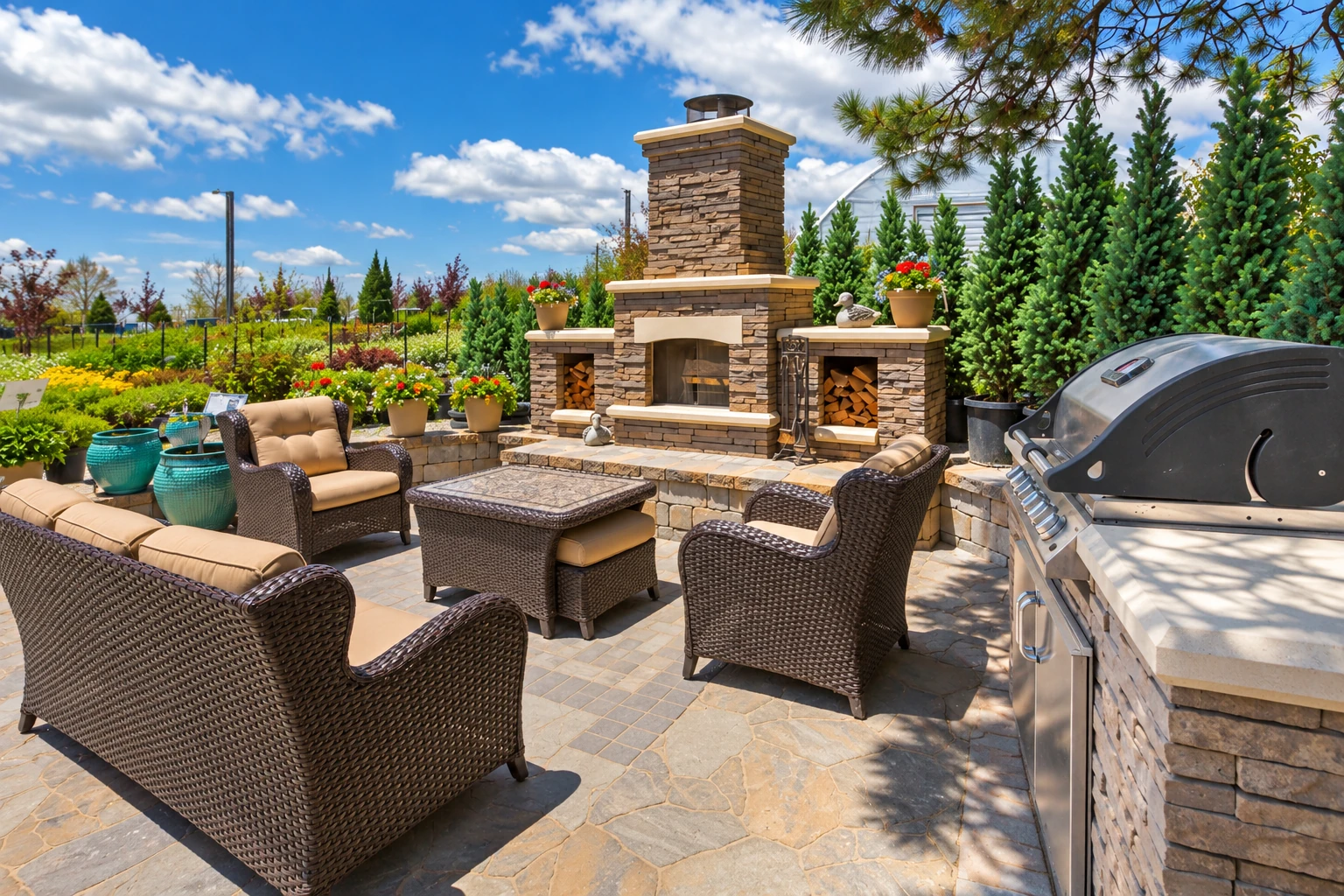
A brick or stone fireplace
Built on site from the hearth up, for a room where you want real masonry and the weight and look that come with it, with the face matched to your house.
Want a fireplace but can't decide between brick, stone or a factory-built unit? We'll help you pick one and put it in right.
Fireplace installation in Little Rock means building a brick or stone fireplace on site or setting a factory-built unit, and we help you pick the one that suits your house, your budget and how you'll use it.
Most people who call us about a fireplace already know which room it goes in but aren't sure what kind to get. The price moves most with that choice, because a masonry fireplace means our crew building the firebox and chimney in place. After that it turns on the brick or stone you pick, how much chimney or vent has to be built, and whether a gas line comes into it.
The schedule usually turns on whether a permit is needed, getting your brick or stone in, and what we find once we look up an old chimney or behind a wall. Your estimate lays out what we'd build and why. We're based in Little Rock and do this work in the cities around it across central Arkansas.
I look at your room in person, write up what we'd build and why, and then work on the fireplace alongside our crew, so the person who planned it is there building it.
Most fireplaces are more about comfort than heating the house, and I'd rather tell you that before you choose than after, so your money goes into the type you'll actually enjoy.
When we build in brick or stone, I match it to what's already on your house, because a fireplace should look like it was always there instead of fighting the rest of the home.
I start at your house, looking at the room, the floor where the hearth will sit and where a chimney or vent can run, because those decide which fireplace makes sense before style does. Then we talk through a brick or stone fireplace built on site against a factory-built unit, and I'll go over it twice if that's what it takes.
For a masonry fireplace, our crew builds the firebox and chimney in place, often on a block core laid the same way we build concrete block walls, then faces it in the brick or stone you've picked. For a factory-built unit, we set it and finish the surround in brick or stone veneer, which gives you the masonry look without the full build.
If you're going with gas, we plan how it vents from the start, before anything goes up, because the vent route decides where the unit can sit and what has to happen to the wall or roof. When we're done, we clean up the room and show you how everything works.
Built on site from the hearth up, for a room where you want real masonry and the weight and look that come with it, with the face matched to your house.
A good fit for a new room or a tighter budget. We set the unit in place and finish it with a brick or stone surround so it looks like part of the house.
If you already have a fireplace that sends its heat up the chimney, an insert set inside the old firebox can be the better job, and I'll check the firebox first.
No chimney doesn't always rule out a fireplace, since a gas or factory-built unit can often vent another way, so we look at the wall, roof and floor before suggesting one.
Send the form and we'll reply within one business day to set up a visit. I'll come look at the room, then write up what we'd build and why, free and with no pressure to book.
Let us know if you're leaning toward masonry or factory-built, and wood or gas, so I come out ready to look at the right wall, floor and chimney.
We're fully licensed and insured, and our work is satisfaction guaranteed. If any part of the plan doesn't make sense, ask, and I'll explain it again until it does.
If the chimney needs work first, or a smaller job gets you what you're after, I'll say so at the estimate instead of selling you more than you need.
Brick and stone surrounds, hearths, veneer faces and mantels, shown as examples to point at when we talk through your own room.
Plain answers to what homeowners usually ask before they choose a fireplace and have it put in.
If budget leads, look at a factory-built unit first, since it's the lower-cost option and widely used in new homes in the US. A brick or stone fireplace is built on site by a mason. If you want real masonry, plan on that, and I'll walk you through both at the estimate so you can weigh them in your own room.
Not much, if it's a traditional open fireplace. EPA guidance says most lose over 90 percent of the fire's heat up the chimney and pull much of the room's warm air with it, so other rooms feel cooler and your central heat works harder. Enjoy it as comfort and backup heat, and let your main system heat the house.
Usually, yes. An insert works much like a wood stove but sits inside the firebox of an existing masonry or metal fireplace, and EPA points owners to gas, pellet or EPA-certified wood inserts for more efficient heat with less smoke. A factory-built fireplace needs an insert designed and tested for that unit, so we check what you have before you buy one.
Yes, EPA says a gas unit can vent through an existing chimney, or straight out through the roof or the wall behind it. One vent maker's install guide gives each direct vent gas unit its own vent to the outside, apart from any chimney serving another appliance. EPA doesn't support unvented models because of indoor air quality, and they're illegal in some places.
The City of Little Rock's Building Codes Division issues building, plumbing, mechanical and electrical permits in the city, and it has its own mechanical and gas inspection sections. Code questions go to its permit line at (501) 371-4832 or Permits@littlerock.gov. Before work starts, we check with the office that covers your address, and when a permit is needed, we apply for it.
Call (501) 274-1083 or send the form if you haven't picked brick, stone or factory-built yet, because sorting that out is what the visit's for.